01The contradiction
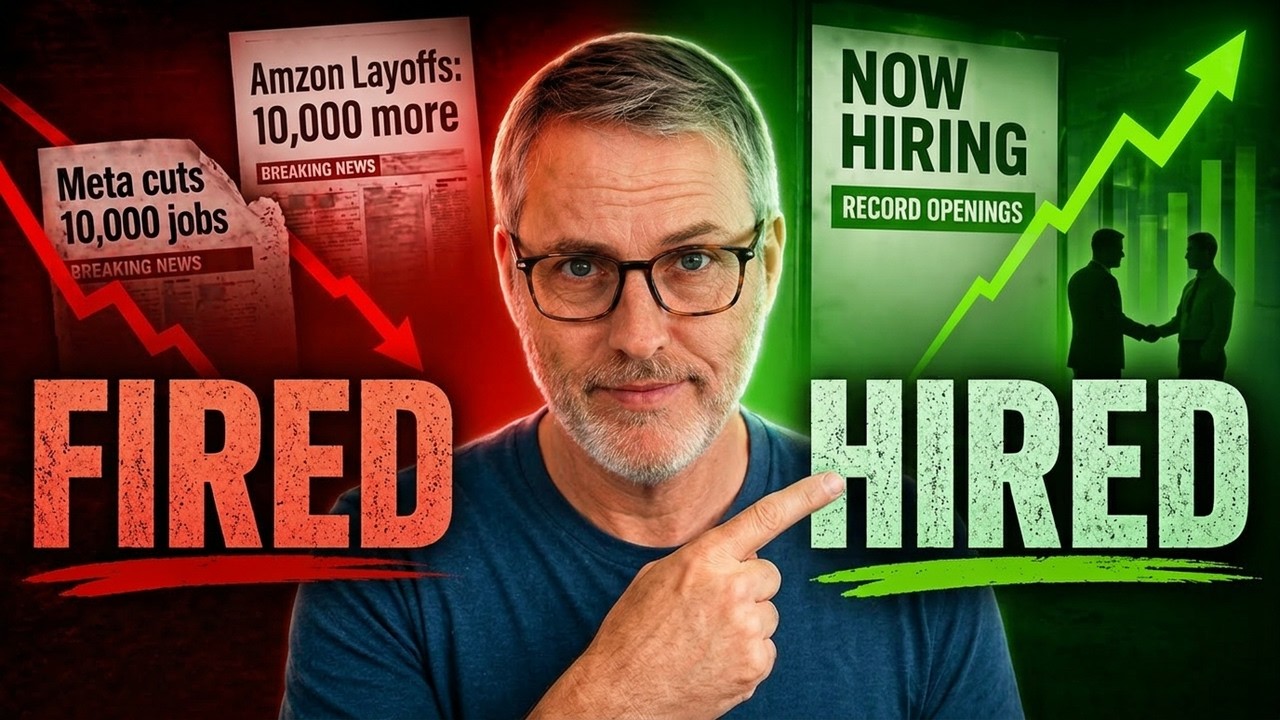
Two headlines that shouldn’t coexist.
Massive layoffs across software — including a lot of product managers. And PM openings at a three-year high. Both are true at the same time. That looks like a contradiction. It isn’t.
Two once-in-a-lifetime shifts are happening at once, both driven by AI. The traditional software development lifecycle is being thrown on its head. And the role of the product manager is being radically redefined along with it. The market is hiring one kind of PM and laying off another.
02The reverse waterfall
The dam moved from engineering to product.
For decades, software was built around one constraint: engineering time was expensive, scarce, and slow. Waterfall optimized for that — spend a long time up front making sure you build the right thing, because you couldn’t afford to waste a build cycle. Agile broke the work into smaller pieces so feedback could come back faster, but the underlying constraint didn’t move. Information flowed through the system, and the dam was at engineering. Not because engineers weren’t good — because building well-architected, secure, scalable software was extremely time-consuming.
AI didn’t remove the need for expertise or judgment in engineering. But it dramatically reduced how long it takes to produce production-grade systems. The bottleneck no longer sits at engineering the way it used to. It moved back to product. The flood of requirements that used to get dammed up at engineering now passes through — and on the other side, there often aren’t enough high-quality product definitions to keep up.
In many cases the pressure has reversed. The waterfall runs dry.
03The ratio
More engineering throughput means more product capacity.
When engineering speeds up, the amount of product definition needed to keep engineers pointed at useful work goes up with it. The historical PM-to-engineer ratio worked because engineering was the slow part. One PM could feed eight engineers because building took so long. Now that has flipped.
Waterfall
1 : 8
Agile
1 : 5
AI / Now
1 : 3
Exact numbers vary by company and team, but the direction is consistent: companies need more product capacity to remove the new bottleneck. That’s the openings side of the contradiction. The layoffs side is something else.
04The four levels of PM
A maturity curve from execution to direction.
Titles vary, but the pattern holds across startups, mid-size, and large companies. AI doesn’t hit every level the same way.
Level 01 · Product Manager
Mostly execution.
Closest to the day-to-day work. Writes requirements, tracks dependencies, follows up on blockers, coordinates across teams. Usually working on a defined, well-understood market and product.
Level 02 · Senior PM (incl. Technical PM)
Execution plus strategy.
Still close enough to write requirements and drive execution, but also expected to think about customer problem, business impact, roadmap, and trade-offs. Builds major new features — sometimes new products. The technical PM adds architectural fluency to that mix.
Level 03 · Principal PM
Mostly strategic.
Less daily detail-management. Shapes product direction, identifies large opportunities, influences multiple teams, creates clarity across the broader organization. Builds brand-new things from a deep read of business dynamics.
Level 04 · Director / VP / CPO
Organizational leadership.
Direction-setting at the org level. Hiring, budget, structure. Less about a specific product, more about the system that produces products.
The arc goes execution → execution plus strategy → mostly strategy → organizational direction. The technical PM is a silo of depth that can apply at any of those levels.
05What AI does to each level
The execution layer compresses. The judgment layer doesn’t.
A lot of formal PM output is now easier to create with AI: meeting summaries, status reports, requirements drafts, customer-feedback synthesis, first-pass briefs, user stories, tickets, even mocks and prototypes. The mechanical parts get faster. But the hardest part of the job was never the mechanical parts. It was figuring out what the customer problem actually is, what trade-offs are worth making, what features should not be built, which opportunities are worth pursuing — the accumulation of judgment built over years.
AI helps with judgment, but it doesn’t remove the need for it. That’s the core shift. The lower end of the role — the execution layer — got far easier and faster. So emphasis and value moved up the curve, onto the parts that AI augments rather than replaces.
At the same time, the role is being asked to expand. PMs are doing more of their own data analysis — in many companies the dedicated data analyst role is shrinking, and PMs (technical or not) are expected to use AI to query, dig, and find signal. PMs are moving closer to design, building mocks and prototypes so the team has something concrete to react to. Some are even shipping code.
The role is being squeezed from multiple directions. Execution is being automated. The surface area is expanding. It’s a new role.
06Why the layoffs
The exposed PMs are the ones who didn’t move.
The PMs most exposed to layoffs are the ones who can’t or won’t use AI to automate the execution part of the job, and who don’t use AI to develop or accelerate their judgment. They’re also the ones who can’t take on the new responsibilities — data analysis, prototyping, sometimes shipping code. These are tough new asks for people who have never had to do them.
That’s the reckoning. The job isn’t disappearing. It’s being redefined. The decision facing every PM right now is whether to pull themselves forward into the new shape of the role — or get pushed out of it.
07The new PM
How to become more valuable, by level.
Junior PMs — use AI to compress the learning curve. The old way of building judgment was slow because feedback loops were slow. AI lets you simulate, pressure-test, and review more cycles per week than was possible before. The goal isn’t shortcuts; it’s acceleration of the same muscles seniors took years to build.
Senior non-technical PMs — use AI to close the technical gap. The fluency that used to require an engineering background is now accessible to anyone willing to build with these tools. That changes how you reason about trade-offs, complexity, and risk.
Technical PMs — the gap you used to own is closing. Stay on the bleeding edge. The non-technical PMs are getting better through AI at exactly the kind of work that used to differentiate you. Some will surpass you if you slow down.
There’s a caveat: AI is accelerating fast enough that even the judgment layer will eventually be augmented in ways we can’t fully predict. When that happens, it’s a different game. But there is a window right now — one year, five years, hard to say — where it has never been better to be a PM, if you fully embrace AI to enhance the job.
08What’s different at startups
At a startup, shipping code is table stakes.
The story above applies to large and mid-size companies. Startups are different. After seven months as a co-founder of an AI-first startup, here’s what the role actually looks like: automate everything that can be automated, bring strategic judgment, build technical fluency to support that judgment, and operate at speed.
And ship code. I push code to production nearly every day. That doesn’t mean every PM has to become a full-time engineer. There’s a fair argument — Lenny’s podcast made it — that you don’t want to be the 51st-best engineer at a company that has 50. Agreed, for large and mid-size. But when you’re the 4th-best engineer at a company that has 3, the calculus is different. At a startup, you need to start coding today.
09Takeaways
The job isn’t dying. It’s being redefined.
Both headlines are true because the market is hiring one PM and firing another. The PM who can use AI to compress execution and extend judgment — and stretch into design, data, and code — is the one being hired. The PM who can’t is the one being cut.
- 01The bottleneck moved from engineering to product.
- 02PM-to-engineer ratios are tightening from 1:8 toward 1:3.
- 03AI compresses the execution layer of the role faster than the judgment layer.
- 04The role is also expanding — data analysis, prototyping, sometimes code.
- 05Layoffs disproportionately hit PMs who didn’t move into the new shape.
- 06There’s a golden window — for those who fully embrace AI to enhance the job.
- 07At a startup, shipping code is no longer optional.
Pull yourself forward. Or get pushed out.